
Bluetooth smartphone access using a reader-controller that can operate without a local Ethernet or Wi-Fi connection at the opening.
Products and selection guidance
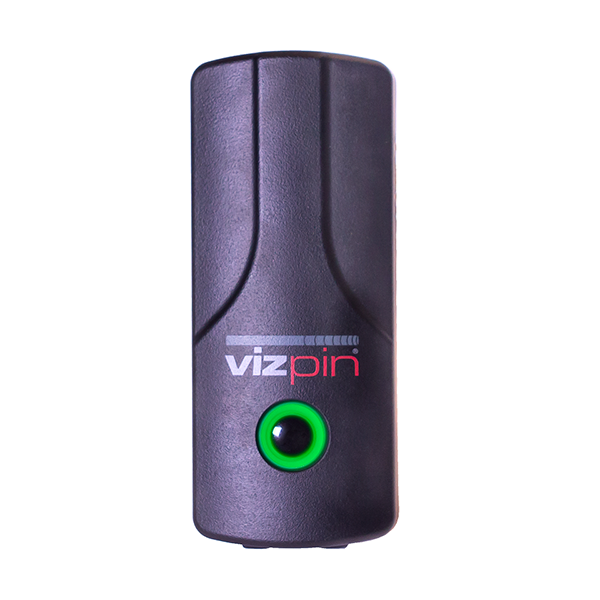
VIZpin uses the phone as credential and data path. VP1 can act as a relay controller or output Wiegand to another access panel, with adjustable range. Define phone support, visitor/fob fallback, relay/door monitoring, power, audit/subscription level and cellular/Bluetooth conditions.
- VP1 dual-mode Bluetooth reader and door controller
- Direct relay versus Wiegand-to-existing-panel integration
- Smartkeys, schedules, fobs and visitor access
- Read range, mounting, door inputs and network-free operation
- Door, lock, free-egress, accessibility and fire-alarm requirements
- Network, power, standby battery and outage behavior
- Current licenses, subscriptions, firmware and integrations
- Administrator training, backup, documentation and maintenance
Site-specific design
Boston High Tech inventories existing equipment and validates current manufacturer compatibility before specifying reuse, migration or replacement. Qualifications may be confirmed privately when needed; license numbers, certificate copies and named certificate-holder details are not published.
Request a manufacturer-specific consultation
Projects are supported from our Charlotte headquarters and local client offices serving Massachusetts, New York and New Jersey.
Official manufacturer references
How to compare and specify this product family
For VIZpin Smartphone Bluetooth Access and VP1 Reader-Controller, the right model and architecture depend on the site, existing infrastructure and operating policy. A proposal should clearly document the following access-control system decisions before equipment is ordered:
- Number and type of controlled openings
- Controller, reader, lock and credential compatibility
- Cloud or on-premise administration and ownership
- Offline behavior, backup power and emergency operation
- Directory, HR, video, visitor and elevator integrations
- Licensing, cybersecurity, training and lifecycle support
Installation, testing and handoff
A site survey records each opening, door hardware, cable path, power, network, credential policy and integration requirement. The design then maps readers, controllers, locks, inputs, outputs and administrator roles to the operational workflow. Commissioning includes door-by-door functional tests, failure-mode and backup-power checks, permission and schedule tests, event verification, administrator training and as-built documentation. Product availability, subscriptions and supported integrations are confirmed for the current project before procurement.
Frequently asked questions
Questions about running doors on smartphone credentials where there is no convenient network drop at the opening.
Do we have to run a network cable to each door?
No. The VP1 is a reader-controller that can operate without a local Ethernet or Wi-Fi connection at the opening, because the phone carries both the credential and the data path. What the door still needs is power, the lock wiring and whatever door inputs the design calls for. Power and lock wiring reach the opening even where the network does not.
We already have an access panel. Can it stay in place?
Yes. The VP1 dual-mode Bluetooth reader and door controller can output Wiegand to that panel instead of acting as a relay controller on its own, which keeps door decisions and history where they live today. Choosing between the two modes changes where schedules are administered, so settle it before the first opening is wired.
What do we hand a contractor or visitor who does not have the app?
There is a defined fallback rather than an exception. Smartkeys, schedules, fobs and visitor access are specified together during design, so the fob path and the visitor path are scoped at the same time as the smartphone credential. Decide how many fobs the site keeps on hand and who issues them, then write that into the operating procedure.
How close does someone have to stand for the door to release?
That value is set during commissioning, since the reader has adjustable range. Mounting position, the approach people actually use and the door inputs at that opening all shape where it lands. A setting that works at a glass storefront entrance is not the setting you want on an interior corridor door, so tune each opening on its own.
When do we decide how access events are audited?
At design, alongside the other VIZpin decisions, rather than after an incident. The proposal defines audit/subscription level together with phone support, visitor/fob fallback, relay/door monitoring, power and cellular/Bluetooth conditions, so it is carried in the same section as those items. Because the phone acts as credential and data path, cellular and Bluetooth conditions at each opening are surveyed and recorded with it.
Do we find out when a door is propped open?
Only where it is scoped. Relay/door monitoring is defined explicitly during design, along with the door inputs at each opening, so door position monitoring is a line item rather than a default. Decide which openings warrant it, then establish during commissioning what gets reported and who receives it.
Official VIZpin software, firmware and support
Official manufacturer resources. We link out rather than host firmware.
Before updating: confirm model, hardware revision, current version, entitlement and rollback plan, and schedule monitored or life-safety-adjacent systems with the administrator.