
Recorder and client software selection for IP, HD-over-coax and hybrid LTS systems.
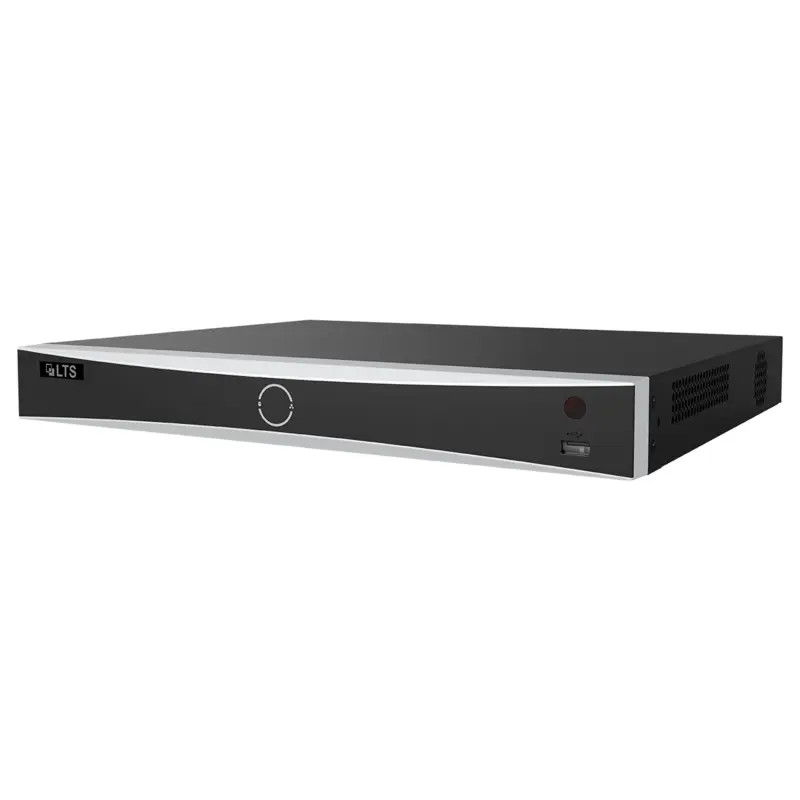
Product and system guidance
Recorder sizing must cover incoming bandwidth, channels, PoE, HDD bays, retention, decoding and analytics. Existing TVI/coax cameras may support phased migration, while network cameras require switch/VLAN planning. Confirm client/mobile software, firmware and remote-access policy.
- NVR channel/PoE/bandwidth and HDD selection
- DVR/TVI and hybrid migration from coax
- Desktop/mobile client and multi-site management
- RAID/retention, UPS, export and cybersecurity
- Scene survey, pixels on target, lens and mounting
- Bandwidth, storage, retention and evidence export
- Firmware, cybersecurity, user roles and remote access
- Current regulatory, procurement and customer compliance requirements
Engineering before procurement
Boston High Tech validates current model availability, firmware, licenses, analytics, VMS compatibility and storage calculations. We do not publish private certificate numbers or named certificate-holder records; qualifications can be confirmed through appropriate private channels.
Request a video-system design review
Serving projects from our Charlotte headquarters and local client offices in Massachusetts, New York and New Jersey. Office visits are arranged in advance.
Official manufacturer references
How to compare and specify this product family
For LTS NVR, DVR, VMS and Storage Design, the right model and architecture depend on the site, existing infrastructure and operating policy. A proposal should clearly document the following video-surveillance system decisions before equipment is ordered:
- Scene purpose and required pixels on target
- Lens, mounting height, WDR, IR and low-light needs
- Analytics supported by the selected camera and VMS
- Bandwidth, PoE and network segmentation
- Retention, storage throughput and export workflow
- User roles, cybersecurity, health monitoring and support
Installation, testing and handoff
Design starts with the evidence or operational result required at each scene—not megapixels alone. We document fields of view, identification targets, lighting, camera placement, network load, recording profiles and retention assumptions. Commissioning covers focus, exposure, time synchronization, analytics calibration, user permissions, mobile or remote access, export testing and health alerts. Final documentation records device names, locations, addressing, retention settings and administrator procedures without publishing private credentials.
Frequently asked questions
Questions about sizing LTS recorders, migrating existing coax cameras, and agreeing the network and remote-access plan with IT.
Do analytics come from the recorder or from the cameras?
From both, which is why the design records analytics supported by the selected camera and VMS instead of listing a feature set. Recorder sizing has to cover decoding and analytics alongside channels and bandwidth, so a recorder that fits the channel count can still fall short for the analytics you want. Decide which scenes need analytics before models are chosen.
How much hard drive space should the recorder have?
The figure is calculated, not estimated. NVR channel/PoE/bandwidth and HDD selection follows from camera count, the incoming bandwidth each camera produces, the retention you have to keep and whether RAID is used, and the recorder must offer enough HDD bays to hold the result. Bring your retention requirement to the design meeting, since retention drives the storage figure directly.
The building is wired with coax. Do we have to rewire for IP cameras?
Not immediately. Existing TVI/coax cameras may support phased migration, so a DVR or hybrid recorder can keep the coax cameras recording while network cameras are added where new cable is run. The pace is set by the condition and routing of the coax, the scenes that need higher resolution first, and the budget for switch and cable work.
Does the recorder need a UPS?
Plan for one, and size it for the switch as well. RAID/retention, UPS, export and cybersecurity are grouped as a single design decision, because a recorder that loses power mid-write and a PoE switch that drops the cameras produce the same result: no video for that period. Decide how long the site should keep recording before an orderly shutdown.
Can our managers watch two buildings from one login?
Multi-site viewing is a client and account question rather than a camera question. Desktop/mobile client and multi-site management is listed as a selection item, so the client software, the account structure and the remote-access policy are settled together. Confirm which client your team will run and which user roles see which site before the recorders are configured.
What does IT need to approve on the network side?
IT needs switch/VLAN planning first, since network cameras require it. Give them the channel count and incoming bandwidth at the recorder, the PoE budget for the switches feeding cameras, the segmentation intended between the camera network and the business network, and the remote-access policy with the user roles behind it. Firmware ownership belongs on that same list.
LTS owner, administrator and buyer resources
Discuss LTS installation, maintenance or service
Detailed guides are maintained by 360TechnologyGroup.com, the parent-company knowledge center.
Official LTS Security software, firmware and support
Official manufacturer resources. We link out rather than host firmware.
Before updating: confirm model, hardware revision, current version, entitlement and rollback plan, and schedule monitored or life-safety-adjacent systems with the administrator.