
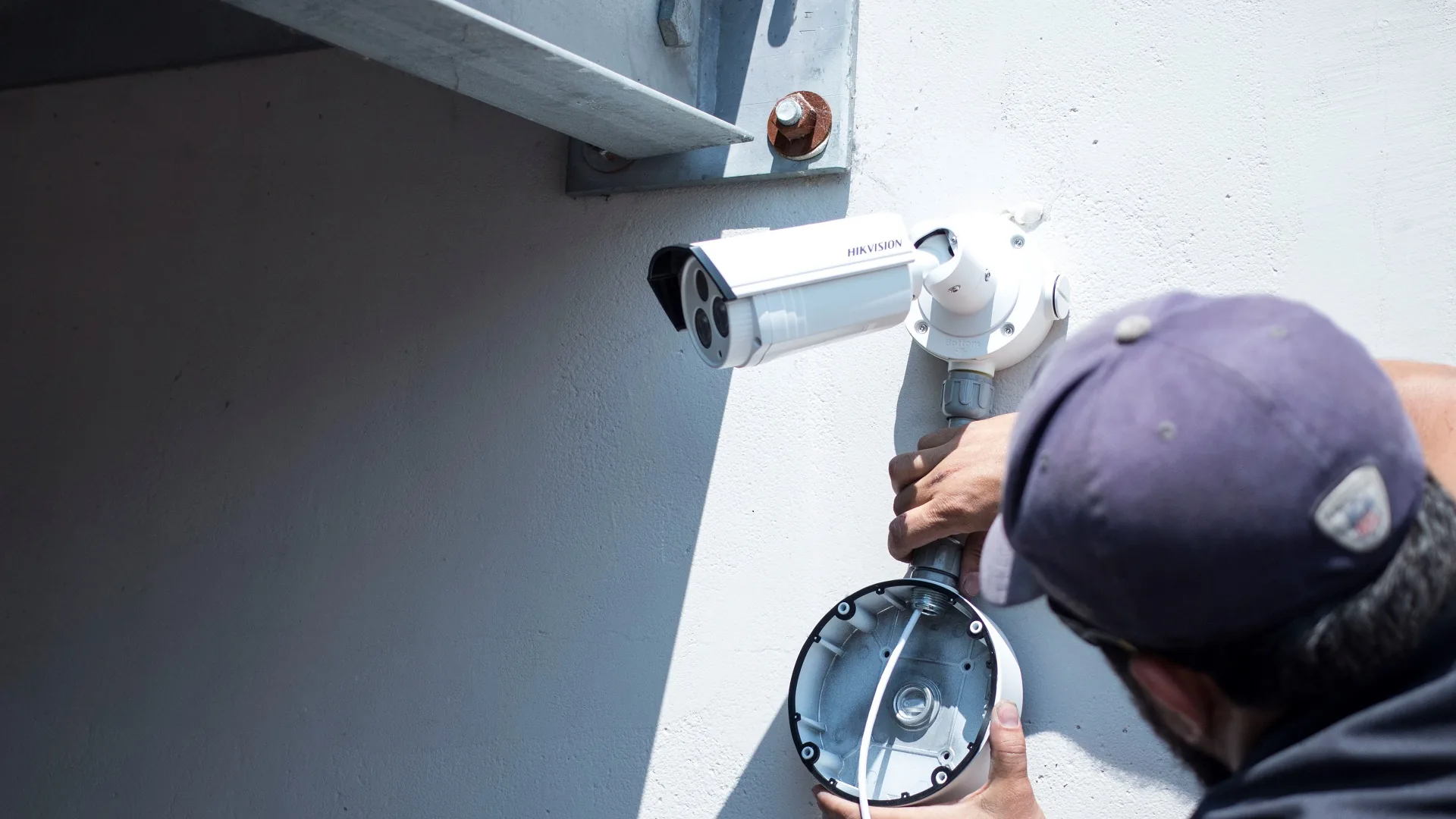
Site Survey & Design
We assess sightlines, lighting and risk to design full coverage.
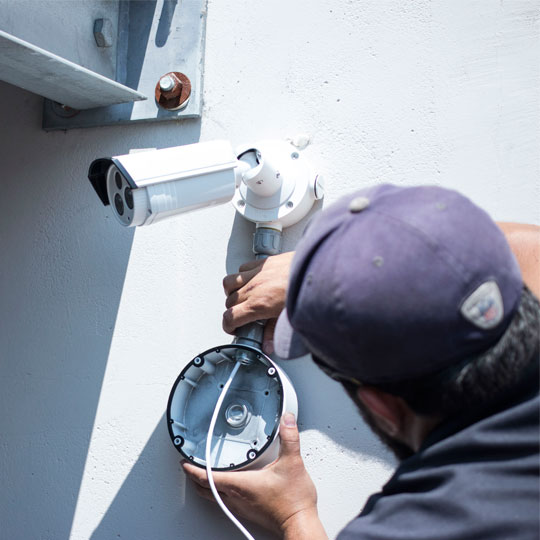
Camera Installation
Professional mounting, aiming and weatherproofing.
Commercial camera planning, budgeting and evidence goals
A useful camera proposal begins with the result each view must produce—not a generic camera count. During discovery we separate general awareness, person identification, vehicle identification, license-plate capture, transaction review and perimeter detection. That determines lens selection, mounting height, lighting, analytics, bandwidth and storage.
Budget is affected by pathways, lifts, exterior work, PoE switching, network separation, recording location, retention period, after-hours access and integrations with access control, intrusion or monitoring. The proposal should state what is included, what existing equipment is being reused and which assumptions require verification.
Project planning questions
How much does a commercial security-camera system cost?
Pricing depends on coverage and evidence objectives, camera and recorder choices, retention, cabling, network work, lifts, integrations and site access. A survey allows these variables to be documented before a fixed proposal is prepared.
How long should commercial video be retained?
Retention should follow the organization’s risk, insurance, operational and regulatory requirements. Common designs are modeled around a defined number of days, recording mode, resolution and frame rate rather than an unexplained storage size.
Are permits or building approvals required?
Requirements vary by jurisdiction, property and scope. Landlord or property-management approval, pathway access, lift rules and work-hour restrictions may apply even when a separate permit is not required. Applicable requirements are confirmed during project planning.
Can an existing camera system be upgraded in phases?
Often. We document cameras, cabling, switches, licenses, recorder capacity and interoperability before deciding what can remain, what should be replaced and how to avoid losing required coverage during migration.
Local coordination: Massachusetts · New York · New Jersey. Request a survey or proposal review.
Commercial camera installation cost and design
Northeast clients can use this guide to prepare scope and acceptance requirements before field work in Massachusetts, New York or New Jersey.
Discuss installation, maintenance or service
Detailed guide maintained by 360TechnologyGroup.com, the parent-company knowledge center.
IP security camera installation, step by step
An IP security camera installation is a network job as much as a mounting job. Each camera is a small computer on your network with an address, drawing power over the same cable that carries its video. Treated properly that is a large improvement; treated carelessly it is how a camera becomes the weakest device on a business network.
How we run one:
- Survey first. What each camera is for, at what distance, in what light. Pixels per foot at the target decides whether an image identifies a person or merely proves one existed.
- Cable and power. Cat6 to each device, terminated and tested, with results recorded. A PoE switch with enough total wattage — not just enough ports, which is the failure that makes cameras reboot at night when the infrared comes on.
- A separate VLAN. Cameras belong on their own network segment, away from workstations and card payments. Free if decided at the start.
- Recording and retention. Fourteen days suits most incidents; thirty to ninety where insurance or licensing requires it, which roughly doubles storage.
- Commissioning and handover. Focus, exposure and analytics set on site, plus logins that belong to you and documentation you keep.
IP camera installation across Massachusetts, New York and New Jersey — new systems, expansions, and repair or takeover of existing installations.