
Multi-technology access readers in mullion, wall-switch, keypad, biometric and enrollment configurations.
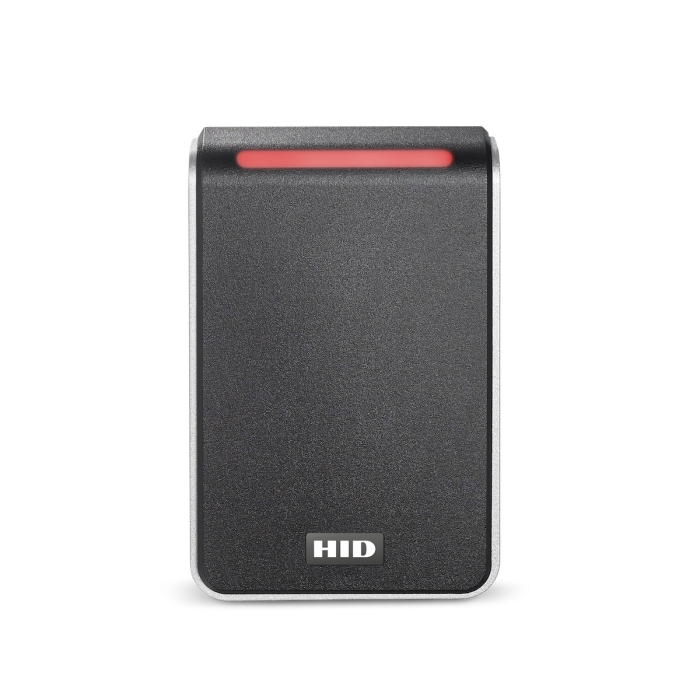
Product and design guidance
HID Signo models include 20/40 form factors, 20K/40K keypads, 40T mechanical keypad, 25B biometric and enrollment/Express options. Signo supports numerous credential technologies, native mobile capabilities and OSDP. Choose by mounting, environmental rating, keypad/biometric requirement, credential plan and controller protocol.
- Signo 20 mullion versus Signo 40 wall-switch format
- 20K/40K/40T keypad options
- 25B biometric and enrollment workflow
- OSDP secure channel versus legacy Wiegand migration
- Code-compliant lock, egress and fire-alarm sequence
- Network, power, battery and outage behavior
- Licenses, subscriptions, integrations and data ownership
- Administrator training, documentation and maintenance
How Boston High Tech helps
We survey the doors, existing panels and readers, credentials, network, identity workflow and integrations before finalizing a bill of materials. We may confirm relevant certification privately, but do not publish certificate copies, license numbers or named certificate-holder information.
Request a product-specific consultation
Serving projects from our Charlotte headquarters and local client offices in Massachusetts, New York and New Jersey. Please arrange office visits in advance.
Official manufacturer references
How to compare and specify this product family
For HID Signo Readers, the right model and architecture depend on the site, existing infrastructure and operating policy. A proposal should clearly document the following access-control system decisions before equipment is ordered:
- Number and type of controlled openings
- Controller, reader, lock and credential compatibility
- Cloud or on-premise administration and ownership
- Offline behavior, backup power and emergency operation
- Directory, HR, video, visitor and elevator integrations
- Licensing, cybersecurity, training and lifecycle support
Installation, testing and handoff
A site survey records each opening, door hardware, cable path, power, network, credential policy and integration requirement. The design then maps readers, controllers, locks, inputs, outputs and administrator roles to the operational workflow. Commissioning includes door-by-door functional tests, failure-mode and backup-power checks, permission and schedule tests, event verification, administrator training and as-built documentation. Product availability, subscriptions and supported integrations are confirmed for the current project before procurement.
Frequently asked questions
Questions about picking a Signo format, adding a keypad or biometric, and connecting the readers to panels already installed.
Which Signo format goes on a narrow aluminum door frame?
The mullion format. Signo 20 mullion versus Signo 40 wall-switch format is a mounting decision first: the mullion version suits the narrow frame face, while the wall-switch version suits a single-gang box on the wall beside the opening. Environmental rating, keypad or biometric requirement, credential plan and controller protocol then narrow the model further.
Some doors need a PIN as well as a badge. What are the options?
Signo covers this with its 20K/40K/40T keypad options, so a code can be required alongside the badge at the openings that warrant it. Which of them suits a given door comes down to mounting format, environmental rating and the credential plan. If the second factor should be biometric instead of a code, 25B biometric and the enrollment workflow are the listed path. Treat it opening by opening rather than as a fleet-wide setting.
Will Signo talk to the panels we already have?
That depends on the protocol your controller accepts. Signo is described with support for numerous credential technologies, native mobile capabilities and OSDP, and the migration question is stated as OSDP secure channel versus legacy Wiegand migration, settled per panel rather than site-wide. The survey inventories existing doors, panels and readers so controller, reader, lock and credential compatibility is checked before a bill of materials is issued.
Staff want to badge in with their phones. Is that supported?
Signo is described with native mobile capabilities, so phone credentials are on the table. What settles it is the credential plan and whether your controller and management platform accept the credential you pick. Licenses, subscriptions, integrations and data ownership belong in the proposal at the same time, since mobile credentials carry ongoing administration that somebody has to own.
Swapping out old readers, does the existing cable come out too?
Not always. The cable requirement follows the protocol the door lands on, so the existing run is traced and recorded before anything is ordered. Mounting is the other half: a Signo 20 mullion needs usable frame face, while the wall-switch format needs a box behind it. Both are captured per opening during the door survey.
If the network drops, does the door still open?
The reader is not what decides that. The controller, the lock and the power design are, which is why network, power, battery and outage behavior is documented as its own proposal item alongside offline behavior, backup power and emergency operation. The code-compliant lock, egress and fire-alarm sequence is written down at the same time, because egress cannot depend on the network.
Official HID software, firmware and support
Official manufacturer resources. We link out rather than host firmware.
Before updating: confirm model, hardware revision, current version, entitlement and rollback plan, and schedule monitored or life-safety-adjacent systems with the administrator.