
IP intercom, door-control and speaker products that combine communication with video and event automation.
Product and system guidance
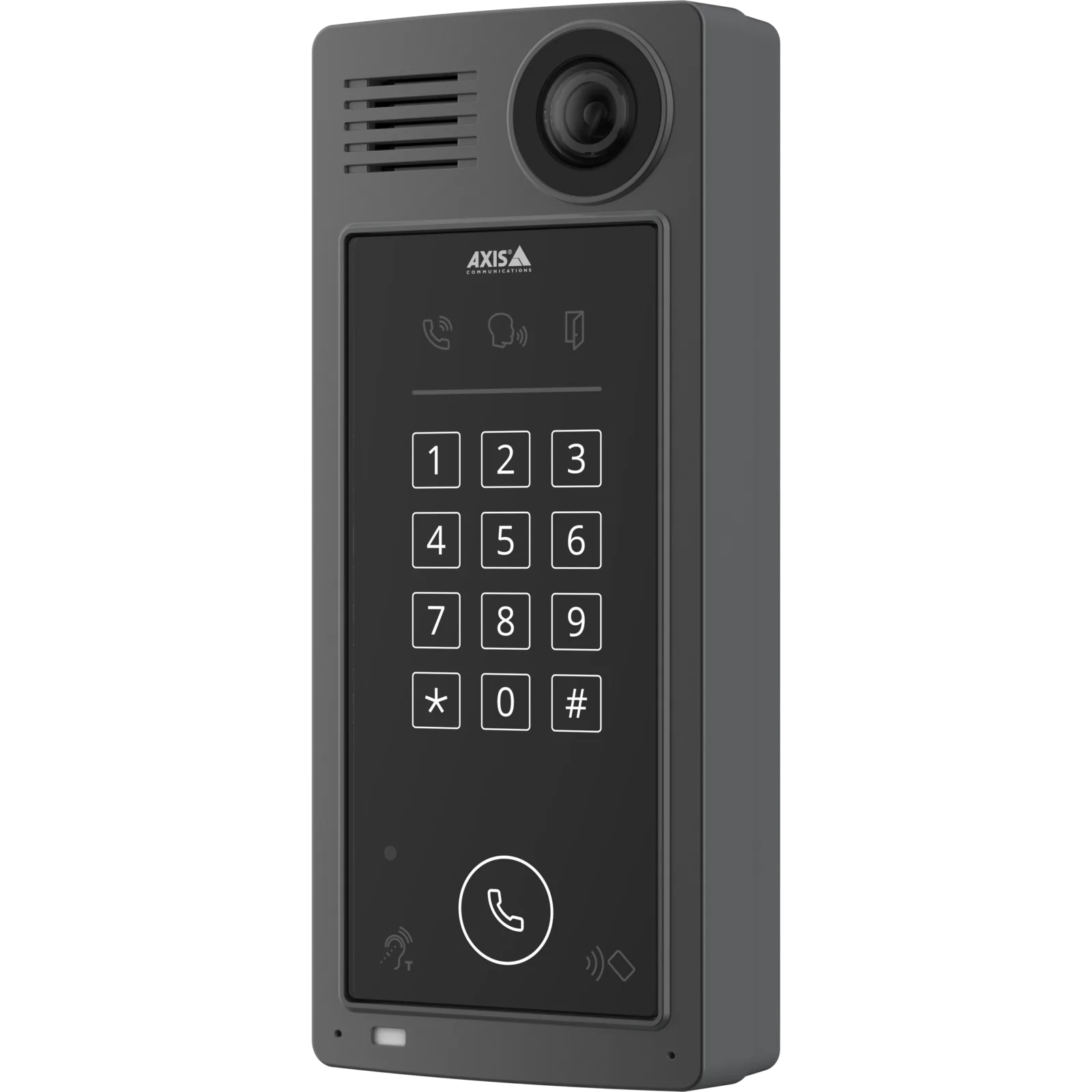
Axis network intercoms support SIP/open integration and door I/O on applicable models. Network speakers provide PoE audio, zoning and remote health management. Axis access-control products add controllers/readers/credentials. Design call routing, lock release, paging priorities, privacy and network segmentation as an integrated system.
- Network video/audio intercom and help-point selection
- Door controllers, readers and Secure Entry workflows
- Horn, ceiling, cabinet and strobe speaker zones
- SIP, VMS, public-address and event-rule integrations
- Scene survey, pixels on target, lens and mounting
- Bandwidth, storage, retention and evidence export
- Firmware, cybersecurity, user roles and remote access
- Current regulatory, procurement and customer compliance requirements
Engineering before procurement
Boston High Tech validates current model availability, firmware, licenses, analytics, VMS compatibility and storage calculations. We do not publish private certificate numbers or named certificate-holder records; qualifications can be confirmed through appropriate private channels.
Request a video-system design review
Serving projects from our Charlotte headquarters and local client offices in Massachusetts, New York and New Jersey. Office visits are arranged in advance.
Official manufacturer references
How to compare and specify this product family
For Axis Intercom, Access Control and Network Audio, the right model and architecture depend on the site, existing infrastructure and operating policy. A proposal should clearly document the following intercom and visitor-entry system decisions before equipment is ordered:
- Resident, tenant and directory workflow
- Audio/video quality at the proposed mounting point
- Mobile, desk-station and accessibility needs
- Door release, elevator and access-control interfaces
- Network, PoE, cellular and call-routing requirements
- Privacy, administrator roles and after-hours procedures
Installation, testing and handoff
Planning follows the visitor journey from arrival through verification, calling, release and audit history. We confirm mounting and accessibility, lighting and acoustics, door hardware, network paths, call routing, directory ownership and failover behavior. Commissioning tests every call destination and release path, including mobile and front-desk workflows, and verifies administrator roles and notification settings. The handoff includes directory-update procedures, user training and a documented support path.
Frequently asked questions
Questions about pairing Axis intercoms, network speakers and door controllers so calls, paging and lock release work as one design.
Which speakers do we use for a warehouse versus an office corridor?
Speaker zones are built from horn, ceiling, cabinet and strobe devices, and the zone plan decides which goes where: horn coverage for open industrial space, ceiling units in finished areas, strobes where noise makes audio alone unreliable. These are network speakers with PoE audio, zoning and remote health management, so the zone map and the switch plan are drawn together.
Does the intercom release the door by itself, or do we need a controller?
Applicable intercom models carry door I/O, while Axis access-control products add controllers, readers and credentials where the site needs badge access, schedules and Secure Entry workflows. One entrance with a call button and a release is a different design from a building with thirty credentialed doors. Decide which of the two you are building before selecting a model.
Do network speakers need amplifiers and speaker cable?
No. They are PoE audio devices, so each one takes a network drop and a share of the switch PoE budget instead of amplifier channels and speaker home runs. Count ports per zone, then check the switch can carry a whole zone at once. Remote health management then shows a failed speaker without anyone walking the building.
What decides the intercom’s mounting height and camera framing?
Reach and sightline together: the call button and reader have to be usable from a seated position, and the camera has to frame a face at the distance a visitor actually stands. The scene survey records pixels on target, lens and mounting for that doorway, since a recessed entry and an exposed one light differently. Verify framing from the mounted unit, not the bench.
We want paging and intercom audio on the same speakers. What has to be decided first?
Paging priorities: what interrupts what when a page, an intercom call and an automated announcement arrive at once. Applicable intercom models support SIP and open integration, and public-address and event-rule integrations belong to the same design, so the priority order, the zones each source may reach, and who is allowed to page are set before commissioning.
How do we keep audio, video and door control off the general office network?
Network segmentation is designed alongside the device list: intercoms, speakers, door controllers and readers get their own segment and rules, with user roles set for who may listen, watch, open a door or change configuration. Privacy expectations for audio and remote access for support go into the same document, and firmware responsibility is assigned to a named group.
Official Axis software, firmware and support
Official manufacturer resources. We link out rather than host firmware.
Before updating: confirm model, hardware revision, current version, entitlement and rollback plan, and schedule monitored or life-safety-adjacent systems with the administrator.