
LTS camera families for fixed, PTZ, low-light, panoramic and license-plate applications.
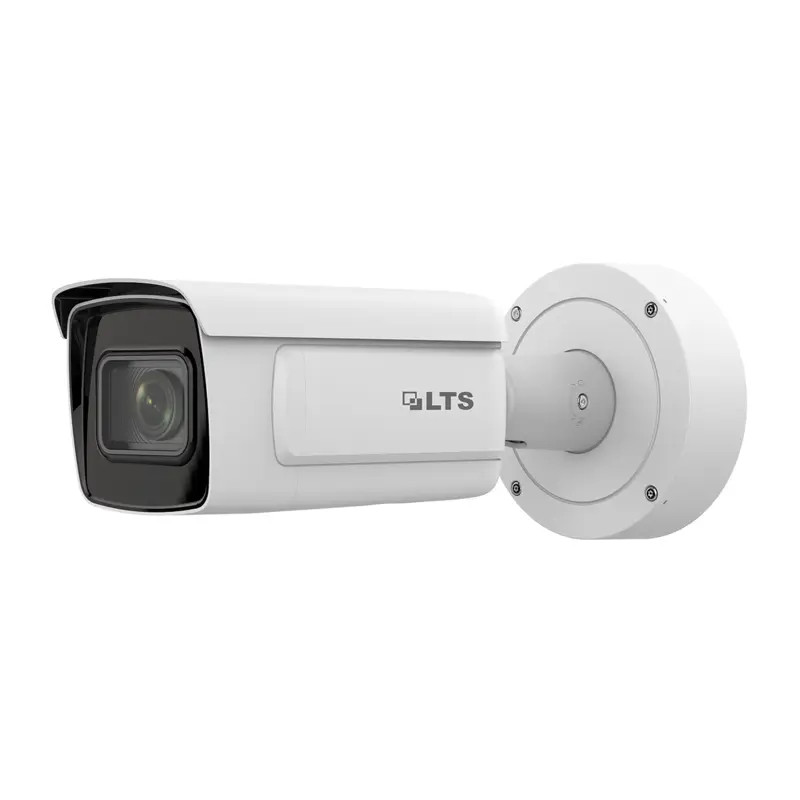
Product and system guidance
Select an LTS camera by scene width, identification distance, lens, lighting, mounting, analytics, codec and environmental rating. LPR requires lane geometry, shutter/illumination and vehicle speed planning. Confirm current model series, firmware, NDAA/customer procurement requirements and VMS/NVR compatibility.
- Fixed dome, turret and bullet camera choices
- PTZ optical zoom, presets and patrol design
- LPR lane, plate size, illumination and capture angle
- Low-light/IR, analytics, audio and weather/vandal needs
- Scene survey, pixels on target, lens and mounting
- Bandwidth, storage, retention and evidence export
- Firmware, cybersecurity, user roles and remote access
- Current regulatory, procurement and customer compliance requirements
Engineering before procurement
Boston High Tech validates current model availability, firmware, licenses, analytics, VMS compatibility and storage calculations. We do not publish private certificate numbers or named certificate-holder records; qualifications can be confirmed through appropriate private channels.
Request a video-system design review
Serving projects from our Charlotte headquarters and local client offices in Massachusetts, New York and New Jersey. Office visits are arranged in advance.
Official manufacturer references
How to compare and specify this product family
For LTS Platinum Network Cameras, PTZ and LPR, the right model and architecture depend on the site, existing infrastructure and operating policy. A proposal should clearly document the following video-surveillance system decisions before equipment is ordered:
- Scene purpose and required pixels on target
- Lens, mounting height, WDR, IR and low-light needs
- Analytics supported by the selected camera and VMS
- Bandwidth, PoE and network segmentation
- Retention, storage throughput and export workflow
- User roles, cybersecurity, health monitoring and support
Installation, testing and handoff
Design starts with the evidence or operational result required at each scene—not megapixels alone. We document fields of view, identification targets, lighting, camera placement, network load, recording profiles and retention assumptions. Commissioning covers focus, exposure, time synchronization, analytics calibration, user permissions, mobile or remote access, export testing and health alerts. Final documentation records device names, locations, addressing, retention settings and administrator procedures without publishing private credentials.
Frequently asked questions
Questions about choosing LTS cameras, planning plate capture and confirming compatibility before an order is placed.
Dome, turret or bullet: what decides the housing?
Mounting position and exposure decide it, not image quality. All three are listed as fixed camera choices, and the deciding inputs are where the camera can physically go, how much weather and vandal exposure it sees there, and the environmental rating that follows from those conditions. Scene width, identification distance and lens selection are worked out separately from the housing.
Do we need a PTZ, or will fixed cameras cover the yard?
A PTZ earns its place when an operator will actually drive it or when presets and patrol design serve a defined route, since a PTZ pointed one way is not covering the other. Fixed cameras hold the scenes that have to be recorded every minute, and a PTZ adds optical zoom on top for detail somebody goes looking for.
What does it take to read license plates at our entrance lane?
A camera set up for the plate and nothing else. LPR needs lane geometry, shutter and illumination planning and a vehicle speed assumption, plus plate size in the image and a capture angle the lane can actually provide. Keep the context view on a separate camera, because settings that read a plate at night are not the settings that show a driver.
How many cameras can we put on one switch?
That comes from two numbers under your control: the bandwidth each camera produces at the codec and stream settings chosen, and the switch power budget, not the port count alone. Plan network segmentation for the camera network in the same exercise, and leave headroom, since higher-resolution replacements later ask more of the same switch.
Will these cameras record to the NVR or VMS we already own?
That gets checked as a pair, camera model series and recorder together, because VMS/NVR compatibility depends on the specific series and its firmware rather than on the brand name. List the recorder make, version and channel count when the cameras are quoted, and confirm the combination against current LTS product support documentation before ordering.
Our purchasing rules require NDAA compliance. How is that handled?
By checking the specific model series against that requirement before the order, since NDAA and customer procurement requirements are treated here as a per-model confirmation rather than a claim about a whole family. Put the requirement into the written specification so a substitution is caught at submittal, and carry the approved model series onto the as-built list.
LTS owner, administrator and buyer resources
Discuss LTS installation, maintenance or service
Detailed guides are maintained by 360TechnologyGroup.com, the parent-company knowledge center.
Official LTS Security software, firmware and support
Official manufacturer resources. We link out rather than host firmware.
Before updating: confirm model, hardware revision, current version, entitlement and rollback plan, and schedule monitored or life-safety-adjacent systems with the administrator.