
Cloud-connected Kisi door hardware for mobile, card, fob, PIN and supported third-party credential workflows.
Product and design guidance
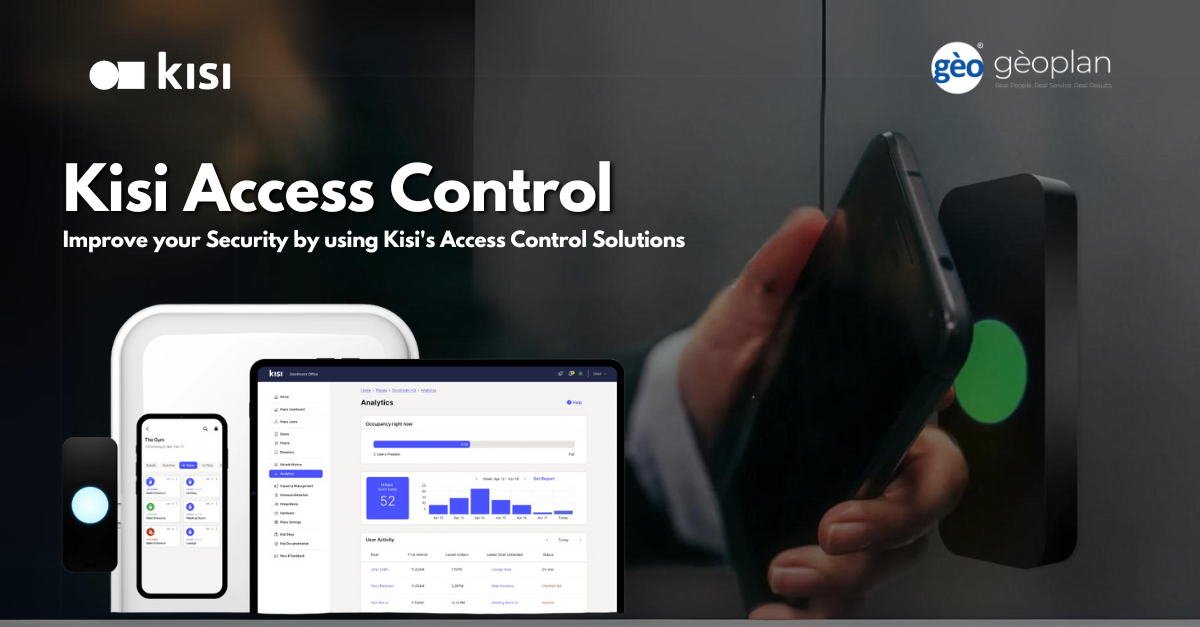
Kisi’s current Pro line includes Controller Pro, Reader Pro and Terminal Pro, with a Wiegand migration board for suitable legacy readers. The design must document every lock, door contact, request-to-exit input, reader, network/power path and offline behavior. Reader choice depends on tap/mobile, physical credential, keypad/QR and check-in needs.
- Controller Pro door control, inputs/outputs and enclosure/power
- Reader Pro mobile and physical credentials
- Terminal Pro QR/check-in workflows
- Wiegand migration versus OSDP/modern-reader replacement
- Code-compliant lock, egress and fire-alarm sequence
- Network, power, battery and outage behavior
- Licenses, subscriptions, integrations and data ownership
- Administrator training, documentation and maintenance
How Boston High Tech helps
We survey the doors, existing panels and readers, credentials, network, identity workflow and integrations before finalizing a bill of materials. We may confirm relevant certification privately, but do not publish certificate copies, license numbers or named certificate-holder information.
Request a product-specific consultation
Serving projects from our Charlotte headquarters and local client offices in Massachusetts, New York and New Jersey. Please arrange office visits in advance.
Official manufacturer references
How to compare and specify this product family
For Kisi Controller Pro, Readers and Credentials, the right model and architecture depend on the site, existing infrastructure and operating policy. A proposal should clearly document the following access-control system decisions before equipment is ordered:
- Number and type of controlled openings
- Controller, reader, lock and credential compatibility
- Cloud or on-premise administration and ownership
- Offline behavior, backup power and emergency operation
- Directory, HR, video, visitor and elevator integrations
- Licensing, cybersecurity, training and lifecycle support
Installation, testing and handoff
A site survey records each opening, door hardware, cable path, power, network, credential policy and integration requirement. The design then maps readers, controllers, locks, inputs, outputs and administrator roles to the operational workflow. Commissioning includes door-by-door functional tests, failure-mode and backup-power checks, permission and schedule tests, event verification, administrator training and as-built documentation. Product availability, subscriptions and supported integrations are confirmed for the current project before procurement.
Frequently asked questions
Questions about Kisi Pro hardware, credential choice and door-level design that come up before a bill of materials is priced.
Controller Pro, Reader Pro, Terminal Pro: which one goes where?
Controller Pro handles door control, inputs and outputs, and the enclosure and power, so it is the panel end of the opening rather than the wall plate. Reader Pro handles mobile and physical credentials at the opening itself. Terminal Pro covers QR and check-in workflows. Which of the three appear at a given door depends on how people are expected to arrive there.
Should every door get the same reader?
Not necessarily. Reader choice depends on tap and mobile use, physical credential policy, keypad/QR needs and check-in requirements, and those differ between a main entrance, a back-of-house door and a shared suite. Write the credential mix per opening into the door schedule so the reader count and the credential order match the way the space is used.
We have readers on Wiegand already. Do they all get thrown out?
Suitable legacy readers can carry over on the Wiegand migration board, and the rest go to OSDP or modern-reader replacement. The survey inspects each reader, its wiring and its condition and marks it keep or replace, because a mixed result is normal in a building that grew in phases. That list drives the hardware count.
What has to be recorded at each door before a quote is real?
Every lock, door contact, request-to-exit input, reader, and network and power path, plus the offline behavior expected at that opening. Any one of them left blank turns into a change order later, since the request-to-exit input alone can decide whether the existing exit device is reusable. The code compliant lock, egress and fire alarm sequence is verified in the same pass.
What happens at the door if our internet connection drops?
That depends on the offline behavior chosen for each opening, which is a design decision recorded before ordering rather than discovered afterward. The same record covers network, power, battery and outage behavior, and the code compliant lock, egress and fire alarm sequence, so free egress is carried by the door hardware rather than by the connection.
Who owns the user records and door history in a cloud system?
That is settled in writing before purchase. Licenses, subscriptions, integrations and data ownership go into the proposal alongside the cloud or on-premise administration and ownership decision, and the identity workflow reviewed during the survey shows where user records originate. Ask for export and offboarding terms in the same conversation, not after the first renewal.
Kisi owner, administrator and buyer resources
Discuss Kisi installation, maintenance or service
Detailed guides are maintained by 360TechnologyGroup.com, the parent-company knowledge center.
Official Kisi software, firmware and support
Official manufacturer resources. We link out rather than host firmware.
Before updating: confirm model, hardware revision, current version, entitlement and rollback plan, and schedule monitored or life-safety-adjacent systems with the administrator.