
Hybrid and commercial-grade intrusion platforms using PowerG wireless and modular expansion.
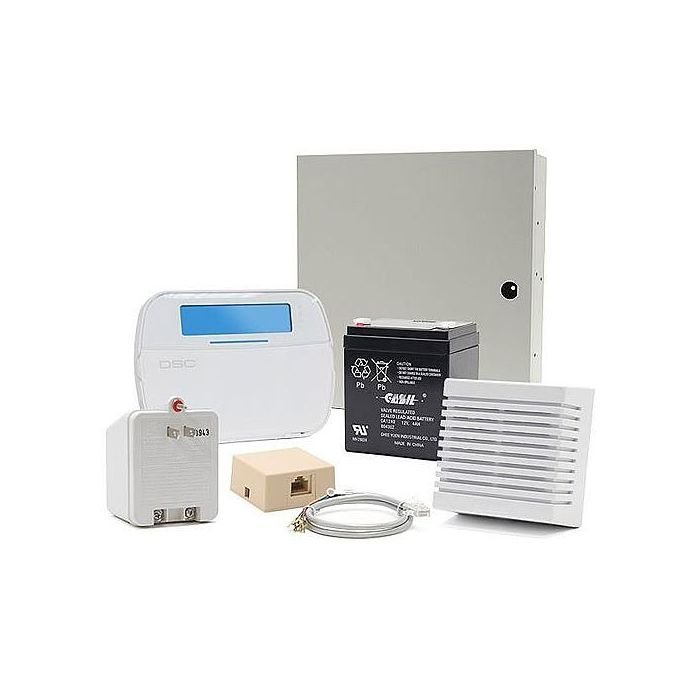
Product and design guidance
PowerSeries Neo fits residential/small commercial scenarios, while PowerSeries Pro adds commercial-scale zones, power, Ethernet, anti-masking and expansion. Existing MAXSYS installations should be inventoried for phased replacement; do not present MAXSYS as the default current platform.
- PowerSeries Neo panel and zone-capacity choices
- PowerSeries Pro commercial capacity and expansion
- Hardwired/PowerG hybrid design and supervised power
- MAXSYS legacy point/zone/database migration
- Site survey, applicable codes and approved operating sequence
- Power, network/radio, standby and outage behavior
- Current product lifecycle, firmware and integration compatibility
- Training, documentation, inspection and preventive maintenance
Engineering and privacy
Boston High Tech confirms the current manufacturer model and site conditions before procurement. Relevant qualifications can be verified privately when appropriate; certificate copies, license numbers and named certificate-holder records are not published.
Request a site-specific design
Supported from our Charlotte headquarters and local client offices serving Massachusetts, New York and New Jersey. Arrange office visits in advance.
Official manufacturer references
How to compare and specify this product family
For DSC PowerSeries Neo and PowerSeries Pro Panels, the right model and architecture depend on the site, existing infrastructure and operating policy. A proposal should clearly document the following intrusion and alarm system decisions before equipment is ordered:
- Protected areas and zone strategy
- Detector technology and environmental conditions
- Keypads, user partitions and authority levels
- Communications path and monitoring compatibility
- Standby power and supervised circuits
- False-alarm reduction, testing and response procedures
Installation, testing and handoff
The site survey maps perimeter, interior and special-risk areas and accounts for pets, airflow, temperature, glass type, ceiling height and normal occupant movement. The scope defines zones, partitions, notification, communicator, monitoring handoff and backup-power assumptions. Commissioning includes walk tests, tamper and trouble tests, communications verification, user-code administration, training and a written zone list. Monitoring and permit requirements are confirmed for the project jurisdiction before activation.
Frequently asked questions
What to settle before choosing between PowerSeries Neo and PowerSeries Pro, or replacing an installed MAXSYS system.
We run a small commercial building, not a house. Which panel applies?
PowerSeries Neo fits residential and small commercial scenarios, while PowerSeries Pro adds commercial-scale zones, power, Ethernet, anti-masking and expansion, so the building label matters less than the zone strategy behind it. Count the protected areas, the detector technologies the environment demands, and the partitions the operation needs, then match the platform to that work.
Our MAXSYS panel still works. Do we have to rip it out?
Not in one weekend, and not on the assumption that MAXSYS is the current platform for new work. Installed MAXSYS systems are inventoried for phased replacement, with MAXSYS legacy point/zone/database migration mapped panel by panel so points keep reporting through the changeover. New areas get designed on a current platform while that plan runs.
Half our building is wired and half is finished space. Can we mix?
Yes. A hardwired/PowerG hybrid design keeps working wired zones on the panel and covers finished areas with PowerG wireless devices where opening walls is impractical. Size supervised power for the combined load including expansion modules, and record which zones are wired and which are wireless so a service call starts from an accurate list.
Where do keypads go, and who should be able to disarm?
Keypads go on the entry and exit paths people actually use, and permissions are decided before programming starts. Keypads, user partitions and authority levels are defined together: which partition each keypad addresses, who may arm only, who may disarm, who may bypass a zone, and which codes expire when a contractor finishes on site.
Can we stay with our current central station?
That depends on the formats your monitoring provider’s receiver accepts, so confirm with the provider before the panel is ordered. Communications path and monitoring compatibility is a two-sided check: the reporting path and format on the panel side, and the account setup and supported formats on the provider side. Signal testing belongs in the commissioning checklist.
What does the system do when power or the network drops?
The approved operating sequence defines that behavior, which is why power, network/radio, standby and outage behavior is settled during design. Standby capacity is sized for the panel plus its expansion and detectors, the reporting path during an outage is written down, and both items are demonstrated at commissioning rather than assumed from a data sheet.
Official DSC software, firmware and support
Official manufacturer resources. We link out rather than host firmware.
Before updating: confirm model, hardware revision, current version, entitlement and rollback plan, and schedule monitored or life-safety-adjacent systems with the administrator.