
Gate operators for community, commercial, industrial and parking traffic applications.
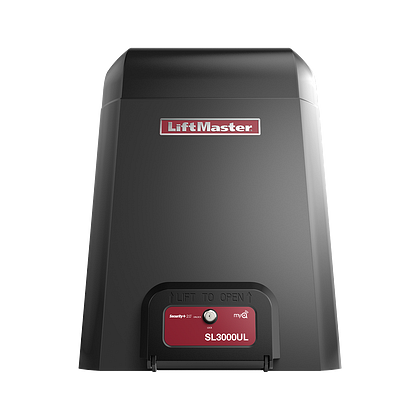
Product and design guidance
LiftMaster categories include slide, swing, barrier, industrial/heavy-duty and specialty operators. Select by gate condition, size/weight, cycles, speed, mounting, voltage and battery backup. A complete UL 325 design includes monitored photo eyes/edges and correct entrapment-zone protection.
- Commercial/industrial slide operator selection
- Swing operator geometry, wind and hinge condition
- TECHNA/barrier and high-throughput parking lanes
- Monitored entrapment protection, loops and emergency release
- Site survey, applicable codes and approved operating sequence
- Power, network/radio, standby and outage behavior
- Current product lifecycle, firmware and integration compatibility
- Training, documentation, inspection and preventive maintenance
Engineering and privacy
Boston High Tech confirms the current manufacturer model and site conditions before procurement. Relevant qualifications can be verified privately when appropriate; certificate copies, license numbers and named certificate-holder records are not published.
Request a site-specific design
Supported from our Charlotte headquarters and local client offices serving Massachusetts, New York and New Jersey. Arrange office visits in advance.
Official manufacturer references
How to compare and specify this product family
For LiftMaster Commercial Slide, Swing and Barrier Gate Operators, the right model and architecture depend on the site, existing infrastructure and operating policy. A proposal should clearly document the following vehicle gate and traffic-control system decisions before equipment is ordered:
- Gate type, weight, length and travel
- Daily cycles and peak traffic
- Monitored entrapment-protection devices
- Vehicle loops, photo eyes and safety edges
- Fire-department and emergency access
- Power, backup operation and preventive maintenance
Installation, testing and handoff
A site review verifies gate construction, travel, wind exposure, traffic flow, power and the required monitored safety devices before an operator is chosen. The final scope should identify controls, loops, photo eyes, edges, access-control interfaces, emergency operation and signage. Commissioning includes force and safety-device tests, access tests, operator limits, user training and a maintenance schedule. Existing gates may require mechanical correction before automation can be installed safely.
Frequently asked questions
Questions about selecting and safely commissioning commercial gate operators for vehicle entrances, parking lanes and industrial sites.
What is the difference between a slide operator and a barrier at a parking entrance?
A slide operator drives a gate that closes the whole opening and secures the perimeter, while the barrier category here is aimed at high-throughput parking lanes where an arm meters vehicles one at a time. A lane that has to stop people and vehicles overnight is a gate application; a lane that has to move cars quickly is a barrier application.
Which operator suits a heavy existing gate that already drags?
None of them, until the gate itself is repaired. Selection runs on gate condition first, then size and weight, cycles, speed, mounting, voltage and battery backup, and an operator sized for a gate that binds will keep meeting the same obstruction. Correct the track, rollers or hinge condition, then select against the corrected gate.
What safety devices does a compliant gate installation include?
A complete UL 325 design includes monitored photo eyes/edges with entrapment-zone protection covering each zone the moving gate creates, so the device count comes from site geometry rather than from a packaged kit. Walk the gate through open and closed positions to find those zones, and record the devices per zone in the submittal.
What happens to the gate during a power outage?
That follows two choices made at selection: whether the operator is specified with battery backup, and how the emergency release is arranged. Battery backup is a selection criterion on this page rather than an assumption, and the release is the manual path once power and battery are both gone. Decide who is permitted to use that release and write it into the operating sequence.
If a credential reader controls the lane, what still has to be specified for the gate itself?
A reader and the lane detection devices belong to different parts of the design, so one does not stand in for the other. The reader governs who is allowed through. Loops, monitored photo eyes and edges, emergency release and correct entrapment-zone protection are specified lane by lane against the approved operating sequence, the site survey and the codes that apply to that gate.
How is the gate’s operating sequence agreed before wiring starts?
The approved operating sequence is written out with the site survey and applicable codes, stating what the gate does on a credential, on a loop, on an obstruction at a photo eye or edge, and on the emergency release. Having that on paper first keeps the electrical, gate and access-control scopes from each assuming a different behavior at the same lane.
Official LiftMaster software, firmware and support
Official manufacturer resources. We link out rather than host firmware.
Before updating: confirm model, hardware revision, current version, entitlement and rollback plan, and schedule monitored or life-safety-adjacent systems with the administrator.