
Gate automation for residential, commercial and selected industrial swing, slide and concealed underground applications.
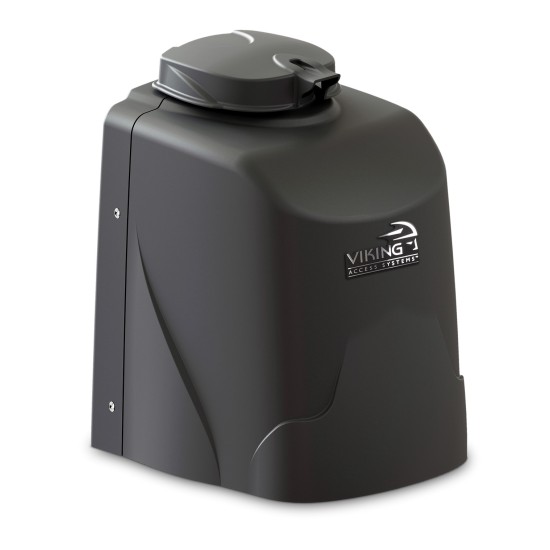
Product and design guidance
Viking offers multiple swing capacities, slide operators using Smart Positioning System technology and underground operators for discreet installations. Operator selection starts with the gate’s type, weight, length, wind load, cycles, geometry and mechanical condition. Safety/entrapment devices and pedestrian separation are designed before commissioning.
- Swing operator arm/geometry and gate capacity
- Slide operator track/cantilever condition and runback
- Underground operator drainage, service access and corrosion
- UL 325 monitored safety devices, loops and emergency release
- Site survey, applicable codes and approved operating sequence
- Power, network/radio, standby and outage behavior
- Current product lifecycle, firmware and integration compatibility
- Training, documentation, inspection and preventive maintenance
Engineering and privacy
Boston High Tech confirms the current manufacturer model and site conditions before procurement. Relevant qualifications can be verified privately when appropriate; certificate copies, license numbers and named certificate-holder records are not published.
Request a site-specific design
Supported from our Charlotte headquarters and local client offices serving Massachusetts, New York and New Jersey. Arrange office visits in advance.
Official manufacturer references
How to compare and specify this product family
For Viking Swing, Slide and Underground Gate Operators, the right model and architecture depend on the site, existing infrastructure and operating policy. A proposal should clearly document the following vehicle gate and traffic-control system decisions before equipment is ordered:
- Gate type, weight, length and travel
- Daily cycles and peak traffic
- Monitored entrapment-protection devices
- Vehicle loops, photo eyes and safety edges
- Fire-department and emergency access
- Power, backup operation and preventive maintenance
Installation, testing and handoff
A site review verifies gate construction, travel, wind exposure, traffic flow, power and the required monitored safety devices before an operator is chosen. The final scope should identify controls, loops, photo eyes, edges, access-control interfaces, emergency operation and signage. Commissioning includes force and safety-device tests, access tests, operator limits, user training and a maintenance schedule. Existing gates may require mechanical correction before automation can be installed safely.
Frequently asked questions
Questions about matching a Viking swing, slide or underground operator to a gate and the safety devices designed around it.
Why would we pick an underground operator over a swing or slide unit?
For appearance, since underground operators are offered for discreet installations where visible equipment is unwanted. They also add work the other formats avoid: drainage, service access and corrosion all have to be designed into the pit. Swing operators are selected on arm geometry and gate capacity, and slide operators on track or cantilever condition and runback.
How is the operator matched to our gate?
By measuring the gate rather than the driveway. Selection starts with type, weight, length, travel, wind load, cycles, geometry and mechanical condition, and Viking offers multiple swing capacities so the operator can suit what the leaf actually weighs. Daily cycles and peak traffic count as much as weight, since a gate cycling all morning is a different duty.
Our slide gate binds on its track. Does that have to be fixed first?
Yes. Operator selection starts from the gate’s mechanical condition, and for a slide installation the track/cantilever condition and runback are checked before an operator is priced. A binding gate loads the operator on every cycle, so rollers, track, posts and available runback are corrected as part of the scope instead of being left for the operator to fight.
Which safety devices belong in the design?
The ones the operating sequence and code call for, documented before commissioning rather than added later: UL 325 monitored safety devices, loops and emergency release, with vehicle loops, photo eyes and safety edges placed for the swing or slide path. Pedestrian separation is laid out at the same time, so people are not routed through the vehicle opening.
Can the gate be opened from a control system or a phone?
That depends on the control path chosen for the operator, and the choice belongs in the approved operating sequence rather than being assumed from a brochure. Write down every way the gate may open, including resident device, keypad, loop and a command from a guard station, and what each one is permitted to do. Product lifecycle, firmware and integration compatibility are verified for the model quoted.
Do the driveway loops and photo eyes have to be replaced with the operator?
Only the ones that cannot serve as monitored entrapment-protection devices for the new operator, or that no longer test correctly. The site survey checks the existing loops, photo eyes and safety edges along with their wiring and locations. Reuse is decided device by device, and a device kept in place is retested with the operator before the entry is turned over.
Viking Access owner, administrator and buyer resources
Discuss Viking Access installation, maintenance or service
Detailed guides are maintained by 360TechnologyGroup.com, the parent-company knowledge center.
Official Viking Access software, firmware and support
Official manufacturer resources. We link out rather than host firmware.
Before updating: confirm model, hardware revision, current version, entitlement and rollback plan, and schedule monitored or life-safety-adjacent systems with the administrator.