
Visible/thermal systems for perimeter verification, radiometric temperature monitoring and coordinated sensor response.
Product and system guidance
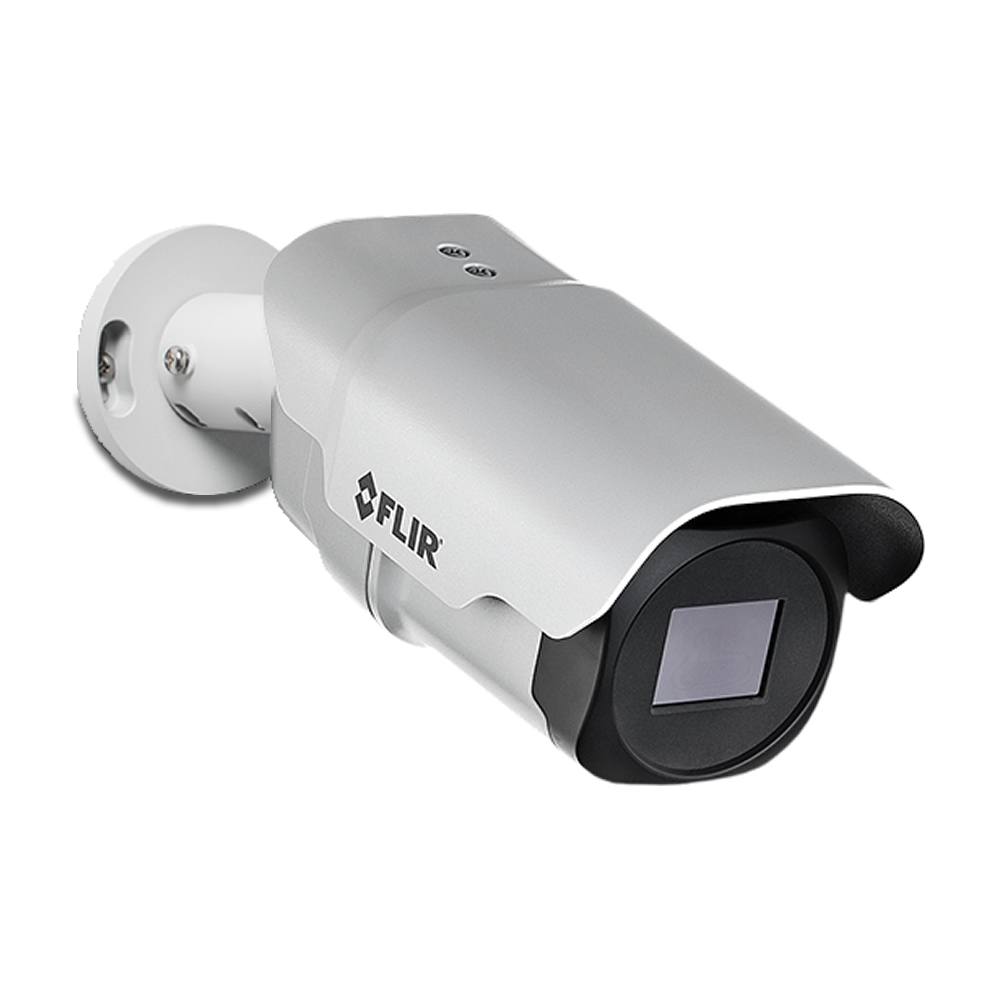
FH/PT multispectral products combine visible and thermal channels, while radiometric models support temperature-threshold applications such as early fire or equipment monitoring. Nexus can coordinate cameras/radar; VMS/PSIM compatibility and alarm workflow must be validated. Life-safety or process monitoring requires application-specific engineering and approval.
- FH-Series ID/R fixed multispectral cameras
- PT-Series AI and thermal/visible tracking
- Radiometric temperature alarms and early-fire applications
- Nexus sensor coordination, VMS and Cameleon/PSIM integration
- Scene survey, pixels on target, lens and mounting
- Bandwidth, storage, retention and evidence export
- Firmware, cybersecurity, user roles and remote access
- Current regulatory, procurement and customer compliance requirements
Engineering before procurement
Boston High Tech validates current model availability, firmware, licenses, analytics, VMS compatibility and storage calculations. We do not publish private certificate numbers or named certificate-holder records; qualifications can be confirmed through appropriate private channels.
Request a video-system design review
Serving projects from our Charlotte headquarters and local client offices in Massachusetts, New York and New Jersey. Office visits are arranged in advance.
Official manufacturer references
How to compare and specify this product family
For FLIR Multispectral, Fire Detection and Nexus Integration, the right model and architecture depend on the site, existing infrastructure and operating policy. A proposal should clearly document the following intrusion and alarm system decisions before equipment is ordered:
- Protected areas and zone strategy
- Detector technology and environmental conditions
- Keypads, user partitions and authority levels
- Communications path and monitoring compatibility
- Standby power and supervised circuits
- False-alarm reduction, testing and response procedures
Installation, testing and handoff
The site survey maps perimeter, interior and special-risk areas and accounts for pets, airflow, temperature, glass type, ceiling height and normal occupant movement. The scope defines zones, partitions, notification, communicator, monitoring handoff and backup-power assumptions. Commissioning includes walk tests, tamper and trouble tests, communications verification, user-code administration, training and a written zone list. Monitoring and permit requirements are confirmed for the project jurisdiction before activation.
Frequently asked questions
Common questions on multispectral cameras, radiometric temperature alarms and how FLIR sensors fit an existing video operation.
Do we need a camera that pans, or will a fixed unit cover the fence line?
A fixed camera covers a defined stretch, and a moving camera follows a target. FH-Series ID/R units are fixed multispectral cameras combining visible and thermal channels over a set scene, while PT-Series products add AI with thermal and visible tracking. Perimeter length, the number of scenes and what an operator must do on alarm decide the mix.
Can thermal cameras take the place of our fire alarm system?
No. Radiometric models support temperature-threshold work, and radiometric temperature alarms and early-fire applications are treated as monitoring that supplements the fire alarm system rather than replacing that system. Life-safety or process monitoring requires application-specific engineering and approval, so a threshold, an alarm workflow and a responsible party are engineered for each monitored asset.
We already run a video management system. Where would Nexus fit?
Nexus sits at the sensor-coordination layer, where cameras and radar are managed together, while a video management system records, reviews and exports footage. Whether the site needs Nexus comes down to how many sensor types cover the perimeter and what the alarm workflow has to do when one of those sensors detects something.
Will these cameras show up in the platform our operators already use?
Compatibility is validated per software version before the order, not after delivery. Nexus sensor coordination, VMS and Cameleon/PSIM integration are checked against the exact release your operators run, along with the alarm workflow that has to fire on a detection. Confirm that pairing against current FLIR documentation before the design commits to it.
How do you decide lens and mounting height for a thermal camera?
From the scene survey and the pixels on target the detection task requires, which together set lens choice, mounting height and camera position before a model number is chosen. Both channels get checked at that position, because a scene framed well for the visible channel is not automatically the scene the thermal channel needs.
Does a multispectral camera change our recording math?
Yes, because each multispectral camera contributes more than one video channel to the recording load. Calculate bandwidth, storage, retention and evidence export with every channel counted, then check the switch path and uplink carrying those streams. Firmware, cybersecurity, user roles and remote access are set on the same pass, so nothing goes live on defaults.
FLIR owner, administrator and buyer resources
Discuss FLIR installation, maintenance or service
Detailed guides are maintained by 360TechnologyGroup.com, the parent-company knowledge center.
Official Teledyne FLIR software, firmware and support
Official manufacturer resources. We link out rather than host firmware.
Before updating: confirm model, hardware revision, current version, entitlement and rollback plan, and schedule monitored or life-safety-adjacent systems with the administrator.