
Hanwha camera families for fixed, multidirectional, panoramic, PTZ, thermal and AI analytics applications.
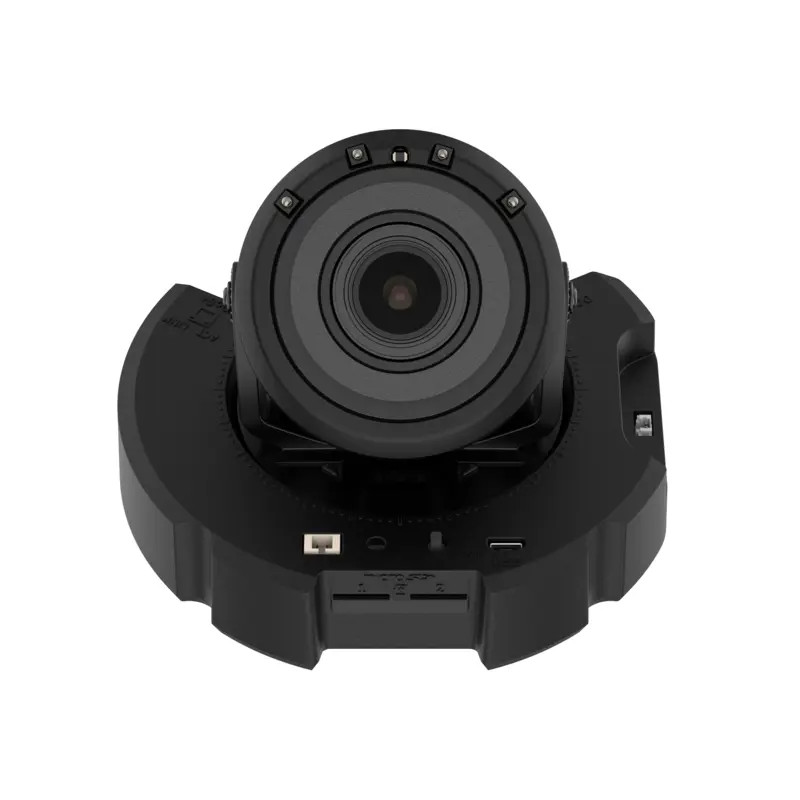
Product and system guidance
Hanwha Vision’s camera portfolio spans value through advanced AI tiers. Select by field of view, pixels on target, low light, WDR/IR, AI license/feature, environmental rating, lens and mounting. Multisensor cameras require per-channel bandwidth and coverage planning; PTZ never replaces required fixed evidentiary views.
- Fixed dome/turret/bullet and box cameras
- Multidirectional, panoramic and fisheye coverage
- PTZ and thermal/specialty devices
- AI object classification, metadata and application analytics
- Scene survey, pixels on target, lens and mounting
- Bandwidth, storage, retention and evidence export
- Firmware, cybersecurity, user roles and remote access
- Current regulatory, procurement and customer compliance requirements
Engineering before procurement
Boston High Tech validates current model availability, firmware, licenses, analytics, VMS compatibility and storage calculations. We do not publish private certificate numbers or named certificate-holder records; qualifications can be confirmed through appropriate private channels.
Request a video-system design review
Serving projects from our Charlotte headquarters and local client offices in Massachusetts, New York and New Jersey. Office visits are arranged in advance.
Official manufacturer references
How to compare and specify this product family
For Hanwha Vision AI Cameras, Multisensor and PTZ, the right model and architecture depend on the site, existing infrastructure and operating policy. A proposal should clearly document the following video-surveillance system decisions before equipment is ordered:
- Scene purpose and required pixels on target
- Lens, mounting height, WDR, IR and low-light needs
- Analytics supported by the selected camera and VMS
- Bandwidth, PoE and network segmentation
- Retention, storage throughput and export workflow
- User roles, cybersecurity, health monitoring and support
Installation, testing and handoff
Design starts with the evidence or operational result required at each scene—not megapixels alone. We document fields of view, identification targets, lighting, camera placement, network load, recording profiles and retention assumptions. Commissioning covers focus, exposure, time synchronization, analytics calibration, user permissions, mobile or remote access, export testing and health alerts. Final documentation records device names, locations, addressing, retention settings and administrator procedures without publishing private credentials.
Frequently asked questions
Questions about selecting Hanwha Vision cameras by scene, and about the bandwidth, storage and analytics decisions that follow.
Can one PTZ cover an area instead of several fixed cameras?
No. PTZ never replaces required fixed evidentiary views, because a camera pointed somewhere else is not recording the event you needed. A PTZ earns its place as an operator tool across a wide area, sitting on top of fixed cameras that hold the views the site must be able to produce afterward. Both appear separately in the camera schedule.
When is a multisensor camera the better choice?
When one mounting point can see several distinct directions, such as a building corner, an intersection of corridors or a canopy. The channels share that mount, so per-channel bandwidth and coverage planning are done together rather than treating the device as one camera. Where the views want different mounting heights, separate fixed cameras stay the cleaner answer.
How do we know a camera will produce a usable face image?
By fixing scene purpose and required pixels on target before picking a model. Identification, recognition and general observation call for different pixel densities at the same distance, and that answer drives lens, mounting height, WDR, IR and low-light needs. A camera that satisfies a wide overview will not satisfy an identification requirement from the same mounting point.
How is storage sized?
From the camera list, the retention period and the stream settings each camera will actually run, then validated before procurement. Bandwidth, storage, retention and evidence export are calculated as one problem: a multisensor device counts per channel, and analytics-driven recording changes the arithmetic. Export practice belongs in that math too, since pulling long clips competes with recording.
Will the camera analytics show up in our VMS?
That rests on two things: the AI license or feature carried by the camera tier selected, and whether analytics supported by the selected camera and VMS line up on the versions you actually run. AI object classification and metadata help only if the VMS can search them. Both sides are checked against current documentation before the camera list is fixed.
Who keeps firmware and camera passwords current after handoff?
Whoever the owner assigns, and that assignment belongs in the handover documents rather than being left implied. Firmware, cybersecurity, user roles and remote access are recorded as one set: which accounts exist, what each role can do, how remote access is reached, and who applies firmware. Cameras left on install-day credentials show up where no owner was named.
Hanwha Vision owner, administrator and buyer resources
Discuss Hanwha installation, maintenance or service
Detailed guides are maintained by 360TechnologyGroup.com, the parent-company knowledge center.
Official Hanwha Vision software, firmware and support
Official manufacturer resources. We link out rather than host firmware.
Before updating: confirm model, hardware revision, current version, entitlement and rollback plan, and schedule monitored or life-safety-adjacent systems with the administrator.