
Recording/storage architecture, appliances and partner integrations for XProtect systems.
Product and system guidance
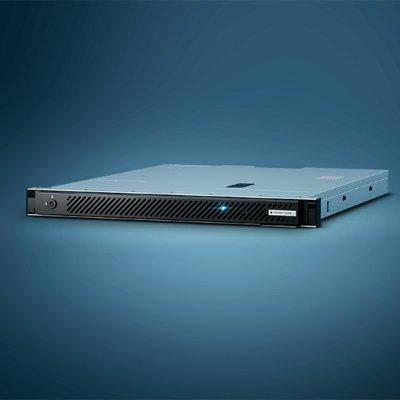
Recording servers and Husky IVO appliances must be sized from camera bitrate, retention, motion/continuous profiles, failover, archive and evidence demands. Milestone’s open platform supports many cameras and integrations, but device pack/driver, firmware and feature support must be verified per model.
- Recording server CPU, storage and network throughput
- Husky IVO appliance capacity and lifecycle
- Failover, archive, retention and evidence-lock requirements
- Camera driver, access control, analytics and third-party integrations
- Scene survey, pixels on target, lens and mounting
- Bandwidth, storage, retention and evidence export
- Firmware, cybersecurity, user roles and remote access
- Current regulatory, procurement and customer compliance requirements
Engineering before procurement
Boston High Tech validates current model availability, firmware, licenses, analytics, VMS compatibility and storage calculations. We do not publish private certificate numbers or named certificate-holder records; qualifications can be confirmed through appropriate private channels.
Request a video-system design review
Serving projects from our Charlotte headquarters and local client offices in Massachusetts, New York and New Jersey. Office visits are arranged in advance.
Official manufacturer references
How to compare and specify this product family
For Milestone Recording Servers, Husky IVO and Integrations, the right model and architecture depend on the site, existing infrastructure and operating policy. A proposal should clearly document the following video-surveillance system decisions before equipment is ordered:
- Scene purpose and required pixels on target
- Lens, mounting height, WDR, IR and low-light needs
- Analytics supported by the selected camera and VMS
- Bandwidth, PoE and network segmentation
- Retention, storage throughput and export workflow
- User roles, cybersecurity, health monitoring and support
Installation, testing and handoff
Design starts with the evidence or operational result required at each scene—not megapixels alone. We document fields of view, identification targets, lighting, camera placement, network load, recording profiles and retention assumptions. Commissioning covers focus, exposure, time synchronization, analytics calibration, user permissions, mobile or remote access, export testing and health alerts. Final documentation records device names, locations, addressing, retention settings and administrator procedures without publishing private credentials.
Frequently asked questions
Questions about sizing XProtect recording, choosing between servers and Husky IVO appliances, and confirming integrations.
Should we build a recording server or buy a Husky IVO appliance?
Both are sized from the same numbers, so the decision is ownership and lifecycle. A recording server built on your standard server platform stays inside IT’s refresh and support cycle, while Husky IVO appliance capacity and lifecycle are tracked as their own line. Ask who patches the operating system, who holds the spares and who answers when recording stops overnight.
What drives the storage calculation?
Camera bitrate, retention, motion/continuous profiles and the archive and evidence demands stacked on top, worked camera group by camera group rather than as one average across the site. A camera recording continuously and a camera recording on motion produce different numbers from the same lens. Failover copies and long-term archive are separate lines in the same worksheet, and export volume is added before the total is fixed.
Which cameras keep recording if a server goes down?
The ones the design covered, since failover is specified rather than inherited: decide which cameras must survive a server outage and which may leave a gap. That decision changes recording server CPU, storage and network throughput as well as the device count, so it is made before hardware is quoted. Prove the failover with a scheduled test at commissioning instead of during the first real incident.
How do we know an export will hold up as evidence?
By testing it before handover with real recorded footage: export a clip, verify it plays for the intended recipient, and confirm the retention and evidence-lock requirements the owner stated are actually in force. Record who is authorized to export, in what format, and where exports are stored. That procedure belongs in the closeout documents with the user roles and remote access rules.
Will our existing cameras connect to XProtect?
That is settled model by model, not by brand. The open platform supports many cameras and integrations, and device pack/driver, firmware and feature support are verified for each one. List the exact models and firmware versions during the survey. A camera that connects may still not expose every stream, audio channel or analytic through its driver, which changes what operators are promised.
Can video be tied to our access control system?
That depends on the access platform you name and what is supported for it, which is why this page lists camera driver, access control, analytics and third-party integrations as decisions to document. Bring the access system and its version plus the workflow you want, such as a door alarm calling up a camera view. Confirm each pairing in writing before operators are told to expect it.
Milestone XProtect owner, administrator and buyer resources
Discuss Milestone installation, upgrade or service
Detailed guides are maintained by 360TechnologyGroup.com, the parent-company knowledge center.
Official Milestone XProtect software, firmware and support
Official manufacturer resources. We link out rather than host firmware.
Before updating: confirm model, hardware revision, current version, entitlement and rollback plan, and schedule monitored or life-safety-adjacent systems with the administrator.