
Pedestrian-lane products for lobbies, campuses and controlled interiors where credential throughput and tailgating deterrence are required.
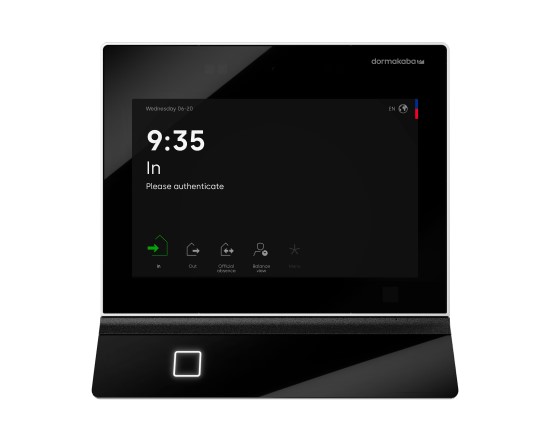
What this product family does
Speed gates and turnstiles must be sized as a lane system: standard and accessible lane widths, credential presentation, direction, throughput, barriers, sensors, emergency egress and guard response all interact. The lobby architecture and queuing model often determine the correct product more than the reader brand.
Products and decisions
| Product area | What it includes | Selection guidance |
|---|---|---|
| Speed gates | Sensor-controlled barrier lanes for modern lobbies | Balance aesthetics, detection, lane width, throughput and emergency opening |
| Tripod/full-height turnstiles | Physical rotation-based passage control | Choose by indoor/outdoor exposure, deterrence, accessibility and egress plan |
| Accessible lane | Wider compliant passage adjacent to standard lanes | Coordinate barrier type, reader reach, stroller/wheelchair flow and alarms |
| Reader/integration | Card, mobile or biometric credential plus access system | Provide secure cabling, mounting, decision timing and denied-access behavior |
Questions to answer before quoting
- People per minute and queue space
- Number and direction of lanes
- Accessible and emergency-egress plan
- Visitor/guard desk and denied-access response
- Who owns administration, backups, updates and recurring services?
- What must continue working during network, internet or power failure?
- Which opening, egress, accessibility and life-safety requirements apply?
- What training, documentation and preventive maintenance are required?
Request a product-specific site survey
Boston High Tech serves projects from our Charlotte headquarters and local client offices serving Massachusetts, New York and New Jersey.
Official manufacturer references
Capabilities and product families were checked against the manufacturer links below.
How to compare and specify this product family
For dormakaba Speed Gates and Turnstiles, the right model and architecture depend on the site, existing infrastructure and operating policy. A proposal should clearly document the following vehicle gate and traffic-control system decisions before equipment is ordered:
- Gate type, weight, length and travel
- Daily cycles and peak traffic
- Monitored entrapment-protection devices
- Vehicle loops, photo eyes and safety edges
- Fire-department and emergency access
- Power, backup operation and preventive maintenance
Installation, testing and handoff
A site review verifies gate construction, travel, wind exposure, traffic flow, power and the required monitored safety devices before an operator is chosen. The final scope should identify controls, loops, photo eyes, edges, access-control interfaces, emergency operation and signage. Commissioning includes force and safety-device tests, access tests, operator limits, user training and a maintenance schedule. Existing gates may require mechanical correction before automation can be installed safely.
Frequently asked questions
Questions about sizing a lobby lane system: throughput, accessible passage, emergency egress, credential decisions and what the guard desk sees.
Our lobby is open and glass-fronted. Speed gates or turnstiles?
The two control passage differently. Speed gates are sensor-controlled barrier lanes for modern lobbies, balanced on aesthetics, detection, lane width, throughput and emergency opening. Tripod and full-height turnstiles use physical rotation-based passage control and are chosen by indoor or outdoor exposure, deterrence, accessibility and the egress plan. Match the choice to the deterrence level the site needs, not to the finish.
Can the accessible lane just be one of the standard lanes?
Plan it as its own lane. The accessible lane is a wider compliant passage adjacent to standard lanes, and it carries its own coordination: barrier type, reader reach from a seated position, stroller and wheelchair flow, and alarm behavior. Standard and accessible lane widths are sized together, because the pair sets the total opening the lobby architecture must give up.
What has to be ready in the lobby floor before lanes arrive?
Power and cabling at every lane position, and a floor the cabinets can be anchored to. Scope should identify secure cabling, mounting, decision timing and denied-access behavior on the reader and integration side, so conduit routes are set before the floor finish goes down. Existing lobbies are surveyed for the same items before a lane count is fixed.
During a fire alarm, how do people get out through the lanes?
Egress follows the accessible and emergency-egress plan written for that lobby, and the lane hardware is selected to suit that plan rather than the other way around. Speed gate selection balances aesthetics, detection, lane width, throughput and emergency opening, while turnstile choice is weighed against exposure, deterrence, accessibility and the same plan. The applicable life-safety requirements are settled with the authority having jurisdiction before hardware is ordered.
The badges we issue today: will they read at the lanes?
They will if the access system can deliver a decision to the lane inside the window the lane expects. Reader scope here is defined as card, mobile or biometric credential plus access system, and decision timing is called out separately from cabling and mounting for that reason. Reader position on the lane also has to suit how people present a badge while walking.
Someone is refused at the lane. Then what?
Whatever the denied-access response says, and that is designed rather than left to the hardware. Visitor/guard desk and denied-access response is one of the items the lane design settles, covering alarm behavior at the lane and the action expected from staff, because tailgating deterrence only works if somebody acts on the alarm. Queue space matters too, since a refused person should not block the line.
dormakaba owner, administrator and buyer resources
Discuss dormakaba installation, maintenance or service
Detailed guides are maintained by 360TechnologyGroup.com, the parent-company knowledge center.
Official dormakaba software, firmware and support
Official manufacturer resources. We link out rather than host firmware.
Before updating: confirm model, hardware revision, current version, entitlement and rollback plan, and schedule monitored or life-safety-adjacent systems with the administrator.